
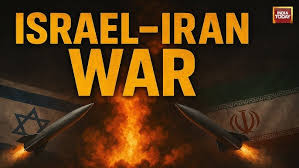
The long-simmering tensions between Iran and Israel have erupted into full-scale conflict, marking one of the most dangerous military confrontations in the Middle East in decades. Since Israel’s surprise attack on Iran on June 13, 2025, both nations have engaged in relentless missile exchanges, targeting military installations, nuclear facilities, and even civilian areas. The conflict has already claimed hundreds of lives, disrupted global oil markets, and raised fears of a wider regional war.
This article examines the root causes of the conflict, the current state of hostilities, and the potential consequences for global security and the economy.
Root Causes of the Conflict
1. Iran’s Nuclear Program & Israel’s Security Concerns
Israel has long viewed Iran’s nuclear ambitions as an existential threat. Despite Iran’s claims that its nuclear program is peaceful, Israel and Western intelligence agencies believe Tehran is weeks away from weaponizing enriched uranium . The International Atomic Energy Agency (IAEA) recently ruled that Iran violated its nuclear non-proliferation obligations, further escalating tensions .
Israel’s Operation Rising Lion on June 13 targeted Iran’s nuclear facilities, missile sites, and military leadership, including the killing of IRGC commander Hossein Salami and top nuclear scientists .
2. Proxy Wars & Regional Influence
For years, Iran has supported Hezbollah in Lebanon, Hamas in Gaza, and Shia militias in Iraq and Syria, using them to pressure Israel indirectly. Israel, in turn, has conducted covert operations against Iranian assets, including cyberattacks and assassinations of nuclear scientists .
The current war represents a shift from proxy warfare to direct confrontation, with both sides now engaging in unprecedented cross-border strikes .
3. Failed Diplomacy & U.S. Involvement
The U.S.-Iran nuclear talks, scheduled to resume on June 16, were canceled after Israel’s initial strikes. Iran has ruled out negotiations while under attack .
President Donald Trump initially opposed Israeli military action but later provided tacit approval, fearing Iran’s nuclear progress. However, he rejected an Israeli plan to assassinate Supreme Leader Ayatollah Khamenei .
Current State of the Conflict (As of June 16, 2025)
1. Escalating Strikes & Civilian Toll
- Israel’s Attacks:
- Targeted Quds Force command centers in Tehran .
- Destroyed Iran’s missile launchers, nuclear infrastructure, and oil refineries .
- Issued evacuation warnings for Tehran residents near military sites 11.
- Iran’s Retaliation:
- Fired 370+ missiles at Israel, hitting Tel Aviv, Haifa, and Petah Tikva .
- Damaged an Israeli oil refinery and power grid, causing fuel shortages .
- 224+ killed in Iran, mostly civilians; 24+ dead in Israel.
2. Military & Strategic Developments
- Israel claims “aerial superiority over Tehran”, allowing deeper strikes .
- Iran’s Revolutionary Guards vow “more forceful” retaliation, raising fears of prolonged war .
- Iran’s parliament is drafting a bill to exit the Nuclear Non-Proliferation Treaty (NPT) .
Global Consequences
1. Economic Impact: Oil Prices & Market Volatility
- Brent crude surged 7% after the conflict began, reaching $78/barrel .
- Further escalation could disrupt the Strait of Hormuz, a critical oil chokepoint .
- Stock markets initially dipped but stabilized, with investors betting on OPEC’s spare capacity .
2. Risk of Wider Regional War
- Hezbollah & Hamas may join, opening new fronts against Israel .
- U.S. & European forces could be drawn in if Iran targets their bases .
- Russia & China’s stance could further complicate global diplomacy .
3. Humanitarian Crisis & Displacement
- Thousands fleeing Tehran amid Israeli airstrikes .
- Hospitals in Iran damaged, worsening medical shortages.
- Israel’s airspace remains closed, stranding travelers .
What Comes Next?
The Israel-Iran war shows no signs of de-escalation, with both sides preparing for weeks of fighting . The conflict could:
- Trigger a broader Middle East war involving U.S. and Gulf states.
- Destabilize global energy markets, leading to inflation.
- Force Iran to accelerate nuclear weapons development if it exits the NPT.
Diplomatic efforts remain stalled, leaving military action as the primary driver of events. The world watches nervously as two of the Middle East’s most powerful nations engage in an unprecedented direct conflict with far-reaching consequences.