
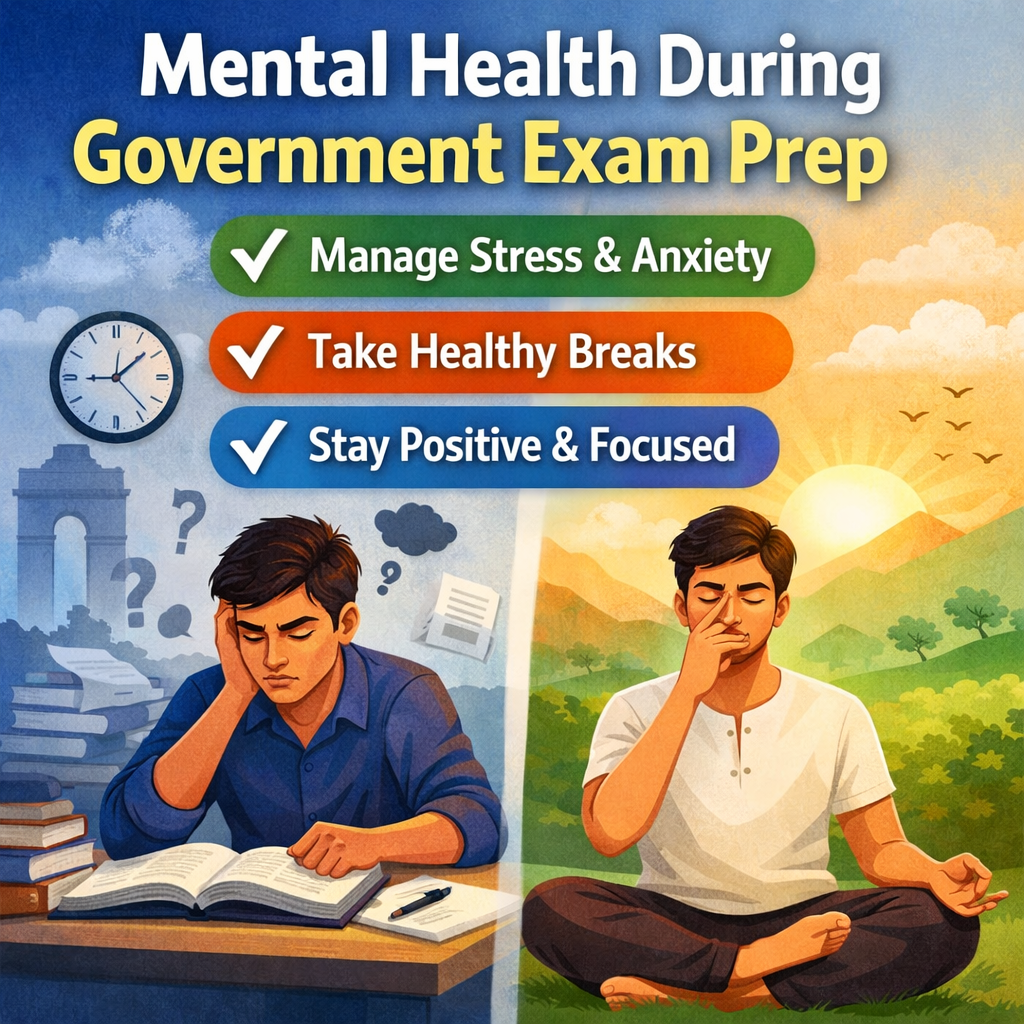
Preparing for government exams in India—such as UPSC, SSC, Banking (IBPS, SBI), Railways, State PSC, Defence, and Teaching exams—is a long and demanding process. While aspirants focus heavily on syllabus, mock tests, and revision strategies, mental health is often ignored.
However, mental well-being plays a crucial role in concentration, memory, confidence, and exam performance. This article discusses the importance of mental health care during government exam preparation in the Indian context and offers practical, realistic strategies for aspirants.
Why Mental Health Is Important During Exam Preparation
Government exams in India are highly competitive and usually involve:
- Years of preparation
- Low success rates
- Financial and family pressure
- Social comparison and self-doubt
- Uncertainty about the future
Without proper mental care, aspirants may experience:
- Anxiety and constant stress
- Burnout and loss of motivation
- Sleep problems
- Poor focus and memory
- Depression and emotional exhaustion
A healthy mind is just as important as strong subject knowledge.

Download ebook or Grab a paperback version
Common Mental Health Challenges Faced by Indian Aspirants
1. Exam Anxiety and Fear of Failure
The belief that “selection is everything” creates extreme pressure. Fear of repeated failure often leads to anxiety and panic.
2. Social and Family Pressure
Questions from relatives, comparison with peers, and societal expectations can lower confidence and increase stress.
3. Financial Stress
Many aspirants feel guilty about not earning while preparing, especially after multiple attempts.
4. Loneliness and Isolation
Long study hours and living away from home in exam hubs like Delhi, Prayagraj, Jaipur, or Hyderabad can cause emotional isolation.
Practical Mental Health Care Tips for Government Exam Aspirants
1. Make a Realistic Study Plan
Avoid unrealistic schedules inspired by toppers or coaching institutes.
Tips:
- Study according to your capacity
- Include revision and buffer days
- Follow the 50–10 rule (50 minutes study, 10 minutes break)
2. Take Breaks Without Guilt
Breaks help your brain process and retain information.
Healthy break activities:
- Short walks
- Stretching or yoga
- Listening to music
- Talking to a friend or family member
3. Practice Mindfulness and Breathing Exercises
Simple daily practices can reduce anxiety and improve focus.
Recommended techniques:
- Deep breathing
- Anulom Vilom
- Guided meditation (5–10 minutes daily)
Free Mental Health Assessment
4. Reduce Social Media and Negative Content
Constant exposure to rank lists, success stories, and study reels can increase self-doubt.
What you can do:
- Set time limits on apps
- Unfollow negative or toxic pages
- Use social media only for useful study content
5. Take Care of Your Physical Health
Physical health directly affects mental strength.
Focus on:
- 7–8 hours of sleep
- Nutritious home-cooked food
- 20–30 minutes of physical activity daily
10 Foods to Improve Mental Health and Boost Brain Memory Naturally
6. Talk About Your Feelings
Suppressing emotions increases mental pressure.
You can talk to:
- Family members
- Close friends
- Fellow aspirants
- Mental health counselors
Today, many online mental health services in India are affordable and confidential.
7. Redefine Success Beyond Selection
Failure in a government exam does not define your worth or intelligence.
Remember:
- Lakhs of capable candidates appear every year
- Skills gained during preparation are valuable
- Multiple career opportunities exist beyond government jobs
Role of Family and Society
Family support can significantly improve an aspirant’s mental well-being.
Families can help by:
- Avoiding constant pressure or comparison
- Encouraging balanced routines
- Supporting backup career plans
- Talking openly about mental health
When Should You Seek Professional Help?
You should seek professional help if you experience:
- Continuous sadness or hopelessness
- Severe anxiety or panic attacks
- Insomnia or loss of appetite
- Thoughts of self-harm
Mental health professionals help aspirants develop coping strategies—just like teachers help with academics.
Final Thoughts
Government exam preparation is a long journey, not a one-day event. Ignoring mental health can make even the best preparation ineffective.
Taking care of your mental well-being is not a weakness—it is a smart and necessary step toward success.
You are more important than any exam.