
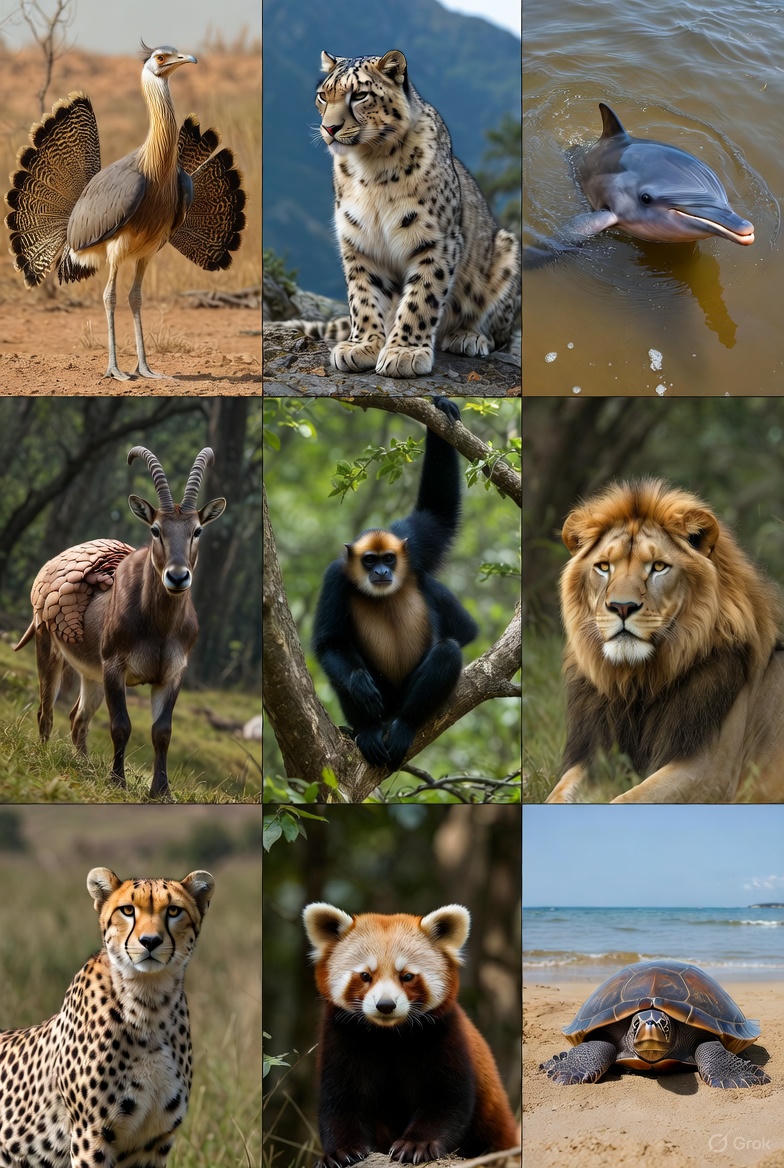
As UPSC Prelims 2026 approaches, environment and ecology remain key areas, with biodiversity and conservation frequently tested. In 2025, several animal species grabbed headlines due to discoveries, conservation initiatives, threats, and policy actions. This article highlights 10 such species, focusing on why they were in the news, their conservation status, habitats, and key facts relevant for exam preparation. These examples underscore themes like human-wildlife conflict, habitat preservation, and international agreements.
1. Great Indian Bustard (Ardeotis nigriceps)
The Great Indian Bustard, one of the heaviest flying birds, was in the spotlight in 2025 when the Ministry of Environment, Forest and Climate Change (MoEFCC) approved funds for the Bustard Recovery Program (2024-2029) to bolster conservation efforts. This initiative aims to address declining populations through habitat restoration and anti-poaching measures.
Conservation Status: Critically Endangered (IUCN); Schedule I (Wildlife Protection Act, 1972).
Habitat: Arid and semi-arid grasslands in Rajasthan and Gujarat.
Key Facts for UPSC: Endemic to India; threats include power line collisions, pesticide use, and habitat fragmentation; part of the 22 species under the Species Recovery Programme; artificial insemination techniques are being explored for breeding.
2. Snow Leopard (Panthera uncia)
Snow Leopards made news with conservation campaigns in Ladakh and Himachal Pradesh employing satellite collaring for better tracking and protection in 2025. These efforts highlight the use of technology in monitoring elusive high-altitude species.
Conservation Status: Vulnerable (IUCN); Schedule I (WPA, 1972).
Habitat: Himalayan regions, including Ladakh and Himachal Pradesh.
Key Facts for UPSC: Known as the “Ghost of the Mountains”; flagship species for high-altitude ecosystems; part of Project Snow Leopard; threats from poaching and climate change impacting prey like ibex.
3. Gangetic River Dolphin (Platanista gangetica)
In 2025, the first-ever tagging of Gangetic River Dolphins in Assam provided insights into their migration, while enhanced protection at Vikramshila sanctuary addressed threats. This underscores ongoing river conservation.
Conservation Status: Endangered (IUCN); Schedule I (WPA, 1972).
Habitat: Ganges-Brahmaputra river systems.
Key Facts for UPSC: India’s National Aquatic Animal; relies on echolocation due to poor eyesight; Project Dolphin (2020) focuses on conservation; India hosts 90% of the global population; threats include dams, pollution, and fishing nets.
4. Indian Pangolin (Manis crassicaudata)
Rising poaching incidents in Telangana brought the Indian Pangolin into focus in 2025, prompting calls for stricter enforcement against illegal trade.
Conservation Status: Endangered (IUCN); Schedule I (WPA, 1972).
Habitat: Forests and grasslands across India.
Key Facts for UPSC: Known as the “scaly anteater”; scales made of keratin; highly trafficked for scales and meat; CITES Appendix I; conservation involves community awareness and anti-trafficking operations.
5. Nilgiri Tahr (Nilgiritragus hylocrius)
The Tamil Nadu government conducted a synchronized population survey in 2025, revealing recovery trends for this endemic species. Project Nilgiri Tahr, launched earlier, continues to aid conservation.
Conservation Status: Endangered (IUCN); Schedule I (WPA, 1972).
Habitat: Montane grasslands of the Western Ghats in Tamil Nadu and Kerala.
Key Facts for UPSC: State animal of Tamil Nadu; October 7 is Nilgiri Tahr Day; threats from habitat loss and invasive species; largest population in Eravikulam National Park.
6. Hoolock Gibbon (Hoolock spp.)
The National Board for Wildlife’s approval for oil exploration in Assam’s Hollongapar Gibbon Sanctuary in 2025 sparked debates on habitat protection.
Conservation Status: Endangered (IUCN); Schedule I (WPA, 1972).
Habitat: Tropical forests in Northeast India.
Key Facts for UPSC: India’s only ape; two subspecies (western and eastern); known for brachiation (swinging); threats include habitat fragmentation and hunting; part of the Species Recovery Programme.
7. Asiatic Lion (Panthera leo persica)
Six Asiatic Lions migrated from Gir Forest to Barda Wildlife Sanctuary in 2025, indicating successful dispersal under Project Lion.
Conservation Status: Endangered (IUCN); Schedule I (WPA, 1972).
Habitat: Gir Forest and surrounding areas in Gujarat.
Key Facts for UPSC: Only population outside Africa; Project Lion (2020) promotes in-situ conservation; threats from diseases and human encroachment; population recovery from near-extinction.
8. Cheetah (Acinonyx jubatus)
Gandhi Sagar Wildlife Sanctuary was selected as the second site for cheetah translocation in 2025, building on Project Cheetah’s successes, including cub births in Kuno National Park.
Conservation Status: Vulnerable (IUCN); Schedule I (WPA, 1972).
Habitat: Grasslands in Madhya Pradesh (reintroduced).
Key Facts for UPSC: World’s first intercontinental carnivore translocation (from Africa/Namibia); extinct in India since 1952; implemented by National Tiger Conservation Authority (NTCA); aims to restore ecological balance.
9. Red Panda (Ailurus fulgens)
The Red Panda Program at Darjeeling’s Padmaja Naidu Himalayan Zoo was a finalist for the 2024 WAZA Conservation Award, with updates in 2025 highlighting breeding successes.
Conservation Status: Endangered (IUCN); Schedule I (WPA, 1972).
Habitat: Bamboo forests in the Eastern Himalayas (Sikkim, Arunachal Pradesh).
Key Facts for UPSC: Sikkim’s state animal; indicator species for climate change; threats from habitat loss; part of Species Recovery Programme; arboreal and bamboo-dependent diet.
10. Olive Ridley Turtle (Lepidochelys olivacea)
A high-level meeting in 2025 addressed the surge in Olive Ridley Turtle deaths along Odisha’s coast, with Operation Olivia by the Indian Coast Guard enforcing protection during nesting season.
Conservation Status: Vulnerable (IUCN); Schedule I (WPA, 1972).
Habitat: Coastal waters and beaches of Odisha (Gahirmatha, Rushikulya).
Key Facts for UPSC: Known for mass nesting (arribada); Marine Turtle Action Plan (2021); threats from trawling and pollution; seasonal fishing bans in Odisha; CITES Appendix I.
These species reflect broader UPSC themes like wildlife laws (WPA, CITES), projects (Tiger, Elephant, Dolphin), and challenges in biodiversity hotspots. Aspirants should cross-reference with IUCN Red List and government reports for deeper insights.