
The American political landscape is currently defined by a profound paradox: while the nation maintains the formal, procedural markings of a stable democracy, a growing body of evidence suggests that its core functions have been “captured” by economic elites. For the average taxpayer, the feeling that the system is “looted” in plain sight is no longer just a cynical opinion—it is a measurable reality.
How did we get here, and why do our institutions seem to prioritize corporate profit over the public good?
1. The Evidence: An Oligarchy, Not a Democracy
The most damning indictment of the current system comes from the 2014 landmark study by Princeton’s Martin Gilens and Northwestern’s Benjamin Page. After analyzing 1,800 policy issues over two decades, their findings were stark:
- Elite Influence: Government policy consistently aligns with the preferences of economic elites and organized interest groups.
- The “Zero” Factor: When the preferences of average citizens diverge from those of the wealthy, the average citizen has effectively “near-zero” influence on the outcome.
The data suggests that the U.S. operates less like a representative democracy and more like an oligarchy, where the legislative agenda is dictated by those with the capital to buy influence.
2. The Military-Industrial Complex: War as a Profit Center
The U.S. history of “failed” foreign interventions—from Vietnam to Iraq and Afghanistan—is often viewed through a strategic lens, but the financial lens tells a different story.
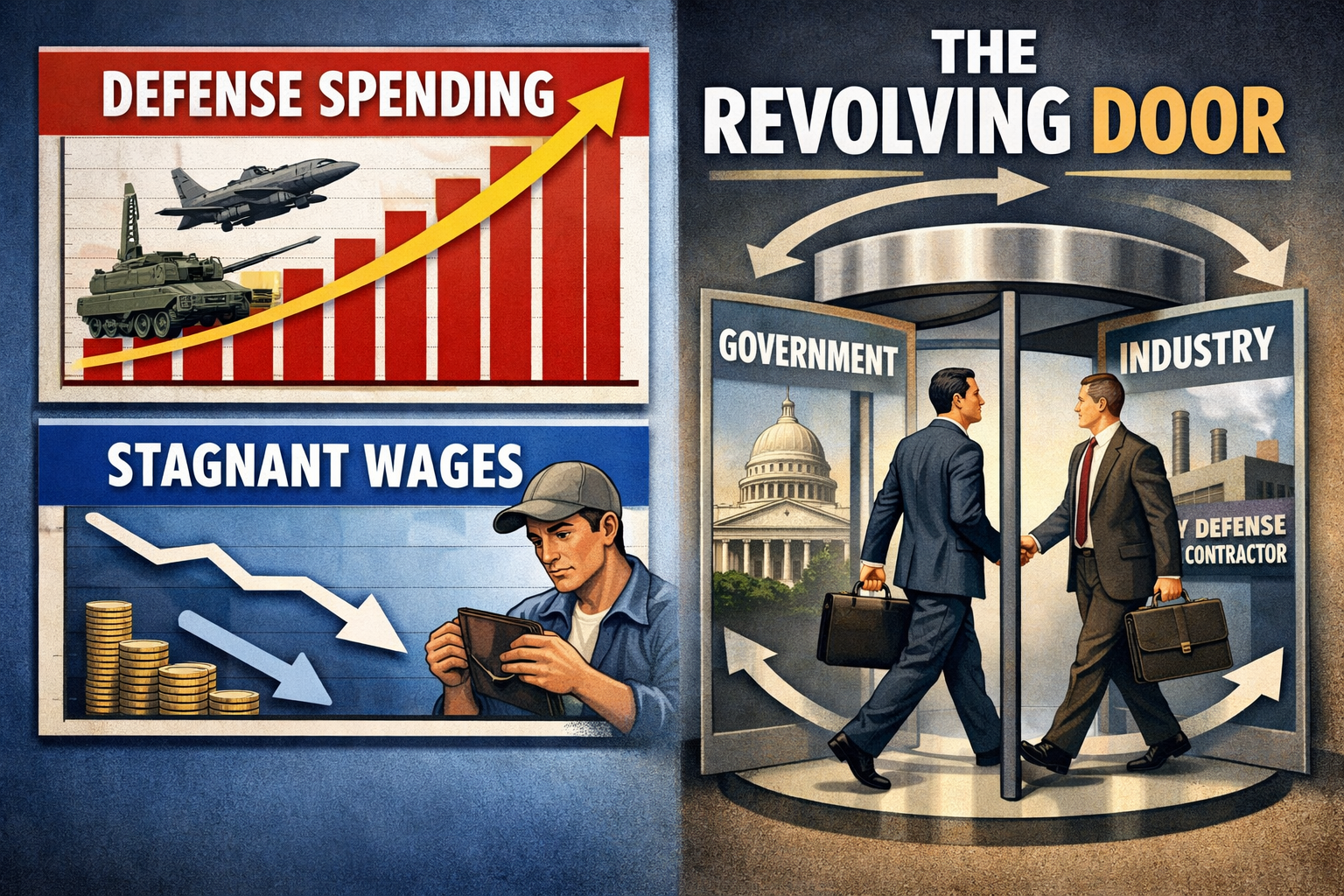
- The Budget Bloat: The U.S. spends more on defense than the next nine countries combined. A massive portion of this taxpayer-funded capital flows directly into the coffers of private defense contractors.
- The Revolving Door: The “Project on Government Oversight” (POGO) has documented how high-ranking officials regularly transition from government roles to lucrative board positions at the very companies they formerly regulated. This creates a feedback loop where conflict becomes a reliable revenue stream for the military-industrial complex, regardless of the mission’s success.
3. Regulatory Capture: Healthcare and Education
Why are basic human needs like healthcare and higher education prohibitively expensive in the U.S. compared to other developed nations? The answer lies in Regulatory Capture.
- Healthcare: Pharmaceutical and insurance lobbyists spend hundreds of millions annually to ensure that drug prices remain high and that the government is restricted from negotiating competitive pricing. The system is designed to maximize shareholder value, not public health outcomes.
- Higher Education: The student loan system has been transformed into a predatory profit center. By lobbying to ensure that student debt is virtually impossible to discharge in bankruptcy, the financial industry has locked generations of Americans into lifelong cycles of interest payments, effectively transferring public wealth into private hands.
4. The Legalization of Corruption
Critics often ask why this “looting” is allowed to continue. The answer is that it has been codified into law:
- Citizens United: The 2010 Supreme Court ruling effectively legalized unlimited corporate and billionaire spending in elections, framing it as “free speech.”
- Institutionalized Lobbying: While technically transparent, the sheer cost of lobbying creates an insurmountable barrier to entry. The average citizen is effectively priced out of the political marketplace.
The Bottom Line: Privatized Profit, Socialized Risk
We are currently living in a system defined by a clear transfer of wealth:
- Risk is Socialized: When industries fail (as seen in the 2008 financial crisis), the taxpayer provides the bailout.
- Profit is Privatized: When those same industries succeed, the gains are kept exclusively by executives and shareholders.
- Public Goods are Commodified: Essential services are treated as market products, designed to extract the maximum amount of rent from the working population.
A Crisis of Strategy
Whether one labels the U.S. a “failed state” or a “captured plutocracy,” the result for the average person remains the same. The institutions that were meant to protect the public interest have been repurposed to serve the interests of the few. Until the structural influence of money in politics is addressed, the cycle of “forever wars” and the erosion of the middle class will likely continue unabated.