
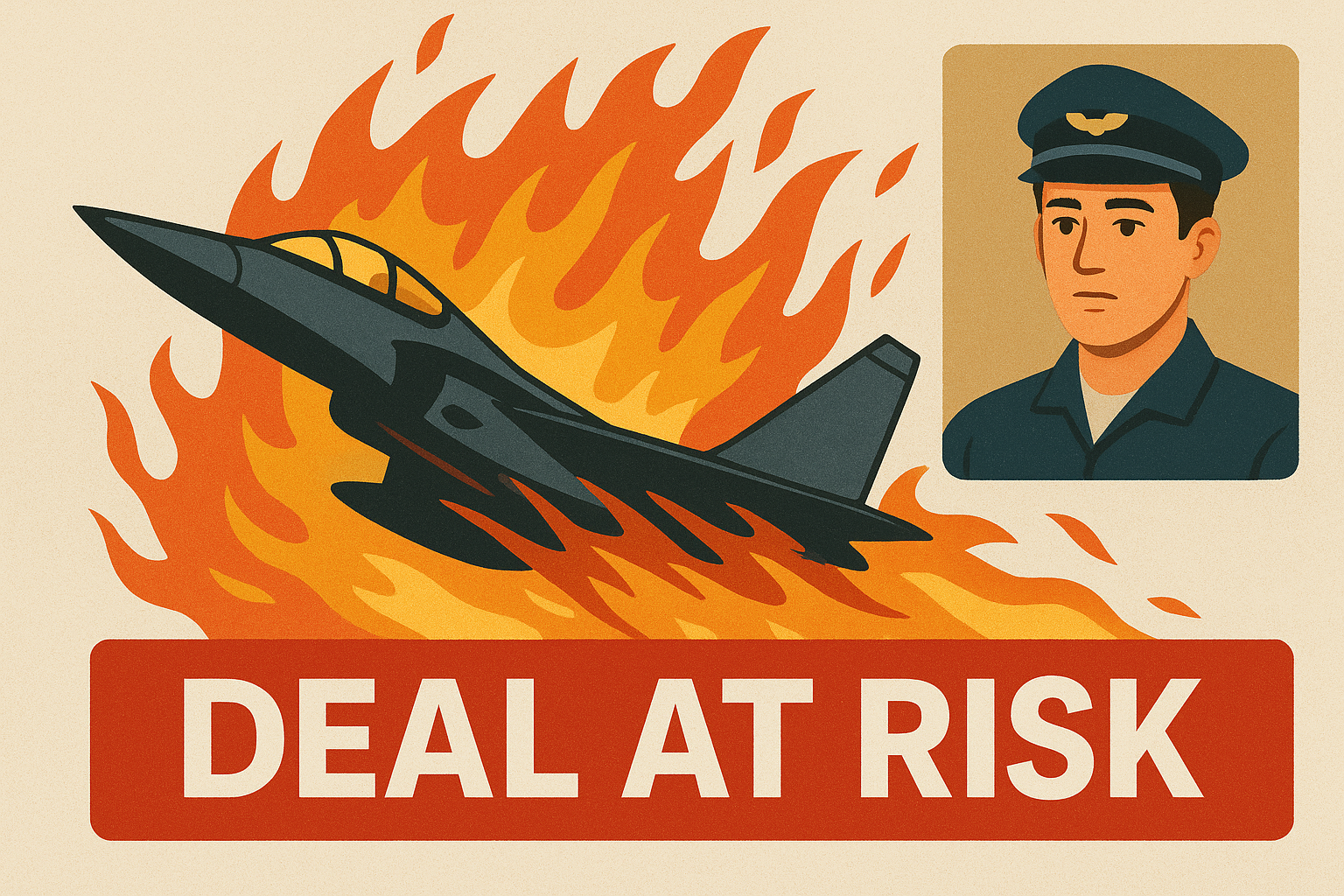
The Fiery Fall: What Happened to the Tejas at Dubai Air Show?
In a heart-wrenching moment that silenced the crowds at the Dubai Air Show 2025, an Indian Air Force (IAF) Tejas fighter jet plummeted from the sky on November 21, erupting into a massive fireball upon impact near Al Maktoum International Airport. The single-engine Light Combat Aircraft (LCA), proudly showcasing India’s indigenous defence prowess, nosedived during a high-G aerobatic maneuver, killing its pilot, Wing Commander Namansh Syal, instantly.
Eyewitness videos captured the horror: The jet, slicing through the clear Dubai skies in front of over 148,000 attendees and global arms dealers, suddenly lost altitude at around 2:10 PM local time. Thick black smoke billowed as emergency crews rushed to the scene, but Syal — a decorated 34-year-old pilot from Himachal Pradesh’s Kangra district — could not eject in time. The IAF confirmed the tragedy, stating, “An IAF Tejas aircraft met with an accident during an aerial display… The pilot sustained fatal injuries.” A Court of Inquiry has been ordered to probe the cause.
Defence experts point to a possible “G-force blackout” — where extreme gravitational forces cause blood to drain from the pilot’s brain, leading to loss of control. “From the visuals, it seems the jet lost control during acrobatics, or there might have been a pilot blackout,” said one analyst, noting Syal’s G-suit may not have sufficed against the maneuver’s intensity. This marks the second Tejas crash, following a March 2025 incident in Rajasthan.
Back home, Patiyalkar village mourned its hero. Syal’s wife, Wing Commander Afshan, and their six-year-old daughter led the funeral with full military honors, as tributes poured in from Defence Minister Rajnath Singh and even Pakistan’s Khawaja Asif. Russian Knights aerobatic team dedicated a “missing man” formation to him: “A brother who didn’t return.”
Tejas: India’s Pride Under Scrutiny – A Timeline of Triumph and Turbulence
The Tejas, developed by Hindustan Aeronautics Limited (HAL) since the 1980s, symbolizes India’s Atmanirbhar Bharat (self-reliant India) push in defence. Designed to replace aging MiG-21s — the last retired in September 2025 after decades of service — this 4.5-generation multirole jet boasts delta wings, advanced avionics (including Israeli EL/M-2052 radar), and GE F404 engines.
Key Milestones:
- 1983: Light Combat Aircraft project greenlit.
- 2001: First flight.
- 2016: IAF induction (No. 45 Squadron).
- 2025: 40 Mk1 variants operational; 180 Mk1A on order, but deliveries stalled by GE engine delays.
At Dubai, the Tejas was the star — performing multiple displays amid India’s pavilion showcasing missiles, drones, and more. But the crash, witnessed by rivals like Pakistan’s JF-17 contingent, turned pride into peril.
The Shocking Fallout: Armenia Halts $1.2 Billion Tejas Deal
The crash’s ripple effects hit hardest on exports. Armenia, seeking to bolster its fleet against Azerbaijan, had been in advanced talks for 12 Tejas Mk1A jets worth $1.2 billion — India’s biggest potential fighter export. Equipped with Israeli radar and avionics from Israel Aerospace Industries (IAI), the deal promised millions for both nations.
But post-crash, Yerevan paused negotiations, citing safety concerns. “The imagery is brutal,” said Douglas A. Birkey of the Mitchell Institute. “A dramatic failure in front of buyers.” A former HAL executive echoed: “Rules out exports for now.”
This isn’t isolated. Argentina and Nigeria, eyeing Tejas for their fleets, may reconsider amid production woes. India’s defence exports hit Rs 23,622 crore in FY 2024-25, but fighters remain elusive — unlike Pakistan’s JF-17, which inked a provisional deal at Dubai.
Broader Implications: IAF’s Squadron Crunch and Global Rivalry
For the IAF, the Tejas crash exacerbates a dire squadron shortage: Down to 29 operational squadrons against a sanctioned 42, as MiG-29s, Jaguars, and Mirage 2000s retire. “The Tejas was supposed to be their replacement, but it’s facing production issues,” an IAF officer lamented. Delays in Mk1A deliveries — tied to GE engines — force eyes on imports: More French Rafales, US F-35s, or even Russian Su-57s.
https://x.com/IAF_MCC/status/1991825238682665465
Geopolitically, it stings amid India-Pakistan tensions. Post-May 2025 clashes, where Chinese PL-15E missiles downed an Indian Rafale, Pakistan touted its “battle-tested” JF-17 at Dubai. As China aids Pakistan’s air power, India’s Tejas — untested in combat — faces skepticism. Experts like former pilot Sandeep Bansal highlight engine tech gaps: “India still faces challenges in advanced production.”
Yet, optimism lingers. “Fighter sales are driven by geopolitics, not one-off incidents,” Birkey noted, citing past crashes of Sukhoi and MiG-29s that didn’t derail deals. HAL eyes Tejas Mk2 with indigenous engines by 2030.
Fact-Check: Myths vs Reality on Tejas Crash and Exports
| Claim | Verdict | Details |
|---|---|---|
| Crash due to design flaw in Tejas | Unproven | Likely G-force or maneuver error; inquiry pending |
| Armenia deal fully cancelled | Paused | Negotiations halted, not terminated |
| Exports impossible now | Overstated | Domestic orders (180+) secure HAL |
| IAF ditching Tejas entirely | False | Remains backbone; imports to fill gaps only |
| Pilot error confirmed | Speculative | Blackout possible, black box data needed |
Path Forward: Can Tejas Rise from the Ashes?
The Dubai tragedy is a gut punch to India’s defence ambitions, but history shows resilience. As HAL ramps up Mk1A production and eyes Mk2, the focus shifts to transparency: Swift inquiry results could rebuild trust. For Syal’s legacy, the IAF vows: “We stand firmly with the bereaved family.”
In a world of escalating rivalries, will this crash ground Tejas’ wings — or fuel fiercer innovation? India’s Atmanirbhar dream demands it.
This article was last updated on November 25, 2025, at 8:00 PM IST.
Related Searches: Tejas crash video Dubai, IAF pilot Namansh Syal tribute, India Armenia Tejas deal 2025, HAL defence export news, IAF squadron strength 2025