
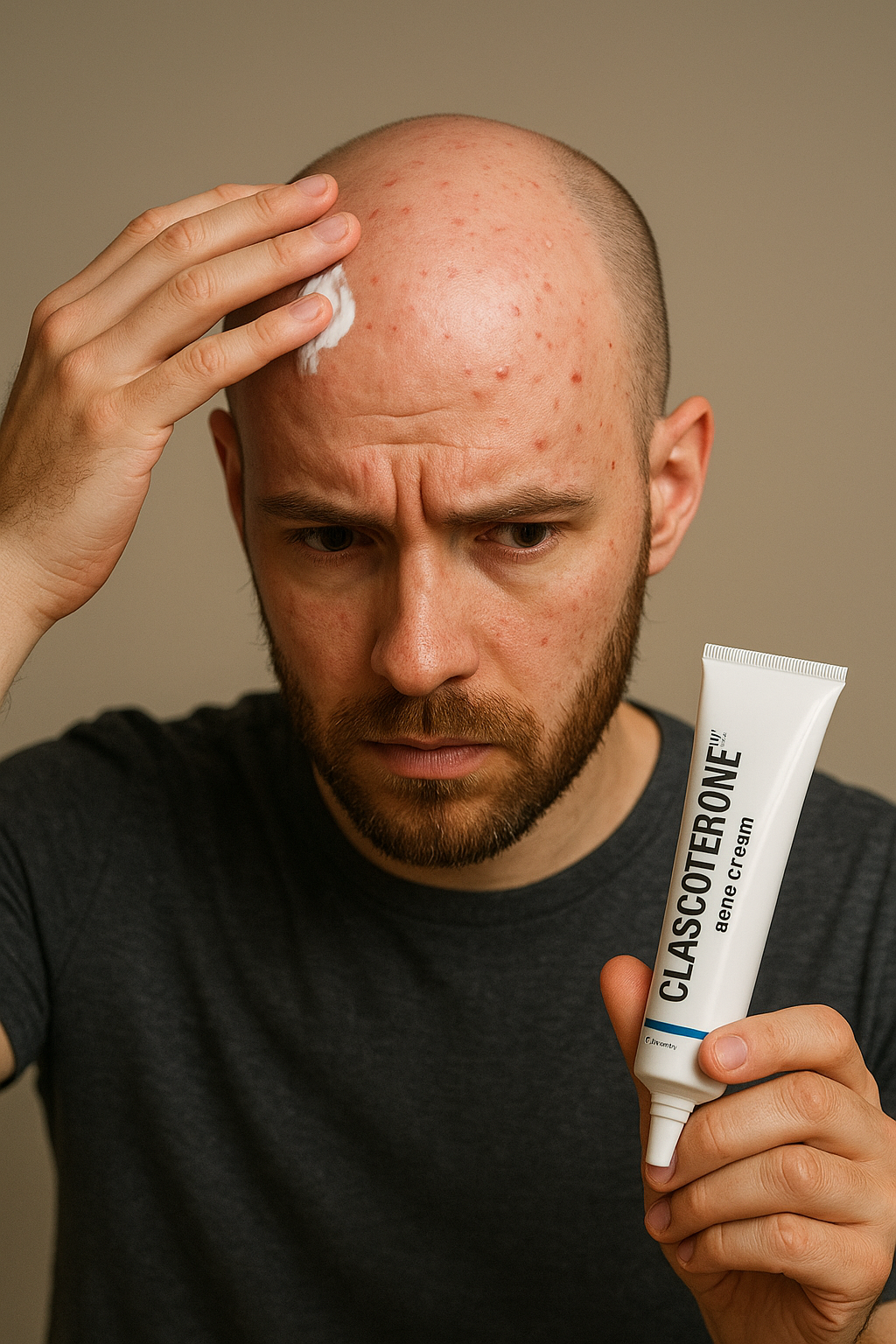
The quest for an effective, non-systemic treatment for androgenetic alopecia (AGA), commonly known as male or female pattern hair loss, has long been a priority in dermatology. A new and promising candidate has emerged, surprisingly, from the world of acne treatment: Clascoterone, marketed as Winlevi for acne vulgaris. Recent Phase III clinical trial results suggest this topical drug, a first-in-class androgen receptor inhibitor, could be a game-changer for hair restoration.
The Science Behind Clascoterone
Clascoterone is a topical anti-androgen. Unlike older, systemic anti-androgens that affect hormone levels throughout the body, Clascoterone is designed to work locally at the site of application.
Mechanism of Action: The primary cause of AGA is the miniaturization of hair follicles due to the effects of dihydrotestosterone (DHT), a potent androgen hormone. DHT binds to androgen receptors (AR) in the scalp, triggering a process that shortens the hair growth cycle and causes the hair to become progressively thinner and shorter.
Clascoterone works by acting as a competitive inhibitor of the androgen receptor. When applied to the scalp, it binds to the AR, effectively blocking DHT from attaching and initiating the hair miniaturization process. This localized action is crucial, as it offers the potential to treat hair loss without the systemic side effects often associated with oral anti-androgens.
The Breakthrough Phase III Trial Results
The most compelling evidence for Clascoterone’s potential in AGA comes from two identically designed Phase III clinical trials, SCALP-1 and SCALP-2, conducted by Cosmo Pharmaceuticals. These trials involved a large cohort of patients with male pattern hair loss.
The results, recently announced, were highly encouraging:
•Significant Hair Regrowth: The trials demonstrated a statistically significant improvement in Target-Area Hair Count (TAHC) compared to the placebo (vehicle).
•Relative Improvement: One study reported a remarkable 539% relative improvement in TAHC for the Clascoterone 5% solution group compared to the placebo group. The combined results from both trials showed a 252% relative improvement.
•Safety Profile: The topical solution was reported to be well-tolerated, with a favorable safety profile, which is a key advantage over existing systemic treatments.
These findings position Clascoterone 5% topical solution as a potential first-in-class topical androgen receptor inhibitor specifically designed to target the biological root cause of AGA directly at the scalp.
Clascoterone vs. Existing Treatments
The current gold standards for AGA treatment are minoxidil (Rogaine) and finasteride (Propecia). Clascoterone offers a distinct advantage over both:
| Feature | Clascoterone (Topical) | Minoxidil (Topical) | Finasteride (Oral) |
| Mechanism | Androgen Receptor Inhibitor (Blocks DHT effect) | Vasodilator (Increases blood flow, prolongs growth phase) | 5-alpha Reductase Inhibitor (Blocks DHT production) |
| Target | Biological Root Cause (DHT binding) | Hair Growth Cycle | Hormone Production (Systemic) |
| Systemic Side Effects | Minimal (Localized action) | Minimal (Localized action) | Potential for sexual side effects (Systemic action) |
| Current Status for AGA | Phase III Complete (Awaiting regulatory submission) | FDA Approved | FDA Approved |
The localized, anti-androgen mechanism of Clascoterone is particularly exciting because it addresses the root cause of AGA without the systemic hormonal changes associated with oral finasteride, which can cause concern for some patients.
What This Means for the Future of Hair Loss Treatment
While Clascoterone is currently approved only as a 1% cream for acne (Winlevi), the successful Phase III data for the 5% solution in AGA paves the way for a new prescription topical treatment.
The next steps involve the submission of the Phase III data to regulatory bodies like the FDA and EMA for approval. If approved, Clascoterone could provide dermatologists with a powerful new tool, especially for patients who are unable or unwilling to use oral finasteride due to potential side effects.
This research underscores a growing trend in dermatology: repurposing drugs with a known mechanism of action for new indications. The drug that clears up acne may soon be the same one that helps millions regrow their hair, offering a new hope for those struggling with pattern baldness.
Disclaimer: Clascoterone 5% topical solution is an investigational drug for androgenetic alopecia and is not yet approved for this indication. Consult with a qualified healthcare professional for any hair loss concerns.